

The slot games have become one of the most familiar types of online entertainment. On device-based applications and demo-first platforms, the new slot experience seems to be as distant as the days when these machines were made colorful and sat inside bars and casinos.
But every spin today is long history. The History of the Slot Game: It is useful to understand the processes through which the current version of the games evolved through the use of technology, improved design, and the expected behaviors of players. What began as a robotic hobby is slowly turning into a digital economy worldwide that runs on software, cloud computing, and e-gaming.
This article will discuss the History of Slot Games: from how they were once crude machines of the early days to the advanced web-based slot machines that constitute the modern iGaming. Through comparing the main steps of the development, one will see how the slots have changed into a complex mechanical system to an engaging digital world.
Evolution of Slot Games:
The Evolution of Slot Games is closely tied to advancements in technology. Each new phase introduced innovations that expanded how players interacted with the game.
Broadly speaking, slot gaming history can be divided into four major phases:
- Mechanical slot machines
- Electromechanical machines
- Video slots
- Online and mobile slot platforms
Each stage built upon the last, gradually transforming both gameplay and accessibility.
The Origins of Slot Machines
The origin of slot machines dates back to the late 19th century.
The earliest machines were mechanical devices featuring rotating reels and simple symbols. Players would pull a lever to spin the reels, hoping matching symbols would line up to produce a payout.
These early machines used:
- Physical gears
- Springs and mechanical reels
- Simple symbol combinations
Payouts were often small prizes rather than cash. Despite their simplicity, these machines became extremely popular because they were easy to understand and required no complex rules.
The appeal was straightforward: spin and see what happens.
Also Read: How to Choose the Best Slot Games on Ludexa?
Classic Slot Machines and the Lever Era
Classic slots, often called “one-armed bandits,” became iconic during the early casino era.
These machines typically featured:
- Three reels
- Basic fruit or card symbols
- Limited paylines
Players pulled a side lever to activate the reels, which is why the nickname “one-armed bandit” emerged.
Classic slots focused purely on chance and simplicity. While primitive by today’s standards, they established the core structure still used in modern slots.
Many digital slots still pay tribute to these machines with classic-themed games.
The Electromechanical Revolution
By the mid 20th century, electric power was being introduced in mechanical systems.
Many entirely mechanical parts were substituted with electrical parts in electromechanical slot machines. This enabled elaborate gameplay capabilities.
These machines introduced:
- Automated payout systems
- Improved reliability
- Greater jackpot abilities
- Even more sophisticated reel mechanisms
The internal mechanics had dramatically changed although it was a lever that was left frequently to be familiar with.
This was the start of the transition of physical to electronic control.
The Birth of Video Slot Machines
The next major step in the slot machines’ evolution came with video technology.
Video slots replaced physical reels with digital displays, allowing games to show animated reels on screens instead of mechanical ones.
This innovation unlocked several new possibilities:
- Multiple paylines
- Animated bonus features
- Larger game interfaces
- More complex game themes
Developers could now experiment with storytelling, sound design, and visual effects.
Video slots transformed slot machines from simple devices into full entertainment experiences.
Also Read: Jose: Stone Age – A Story-Driven Slot Adventure of Exile, Pride, and Survival
The Rise of Online Slot Games
Everything was transformed by the internet.
In late 1990s and the early 2000s when online casinos started to emerge, slot games too soon made their way to the digital world. Players were now able to use web browsers to access slots in place of physical machines.
The period of online slot games history presented some of the most prominent benefits:
- Hundreds of games at a single touch
- Global player reach
- Software-driven gameplay
- Advanced graphics and sound
Slots were not connected with brick-and-mortar casinos anymore. One could play at the comfort of their homes.
This made slot gaming reach a large number of people.
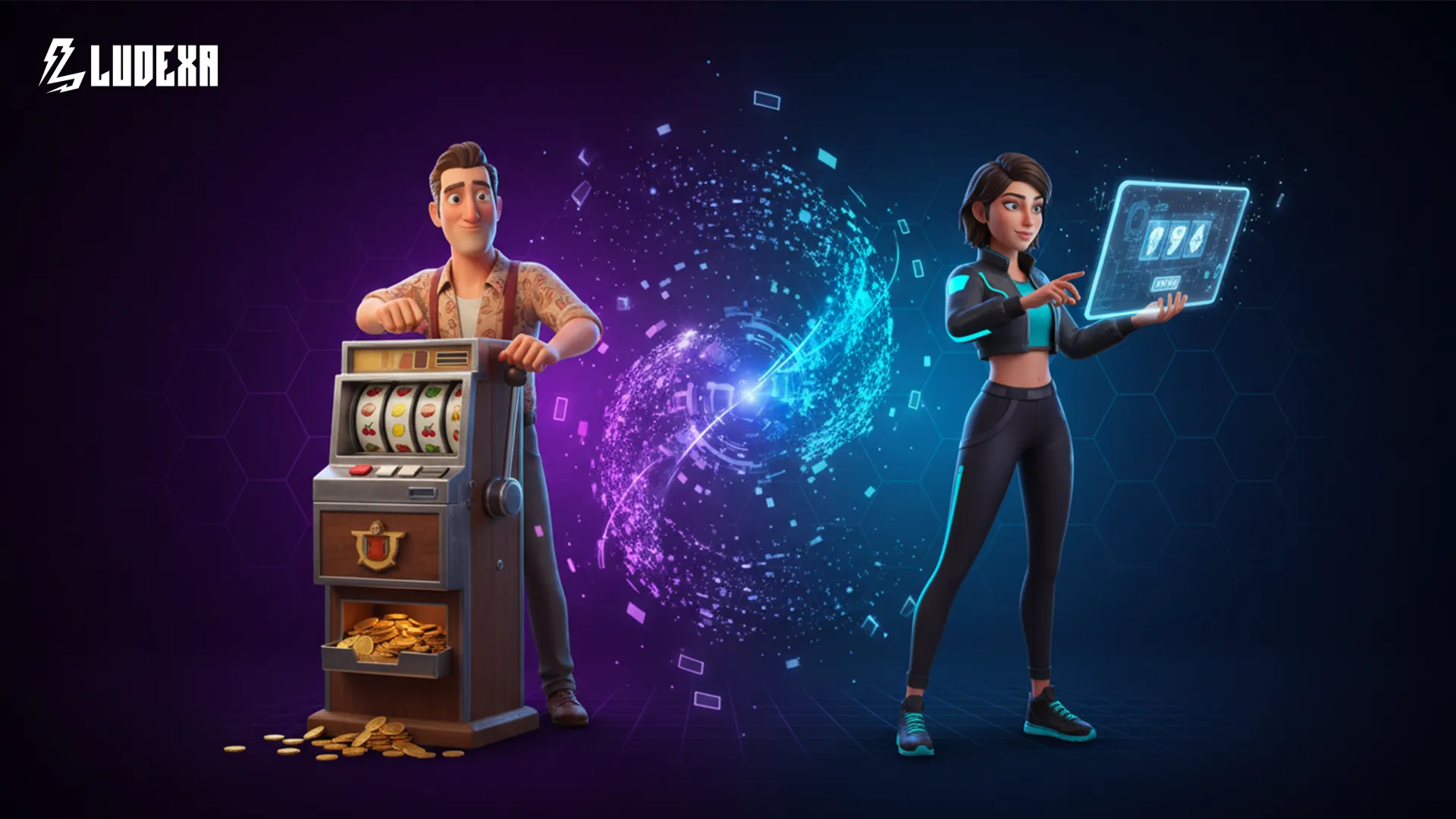
Digital Slot Machines and Software Development
As online gaming technology improved, slot games became increasingly sophisticated.
Digital slot machines allowed developers to incorporate:
- Complex bonus rounds
- Expanding reels and cascading mechanics
- Progressive jackpots shared across networks
- Interactive mini-games
Because software controlled the entire system, developers could experiment with themes ranging from fantasy adventures to cinematic experiences.
Slots began to feel more like video games than traditional machines.
Mobile Gaming and the Next Stage of Evolution
The rise of smartphones pushed slot gaming into another new phase.
Mobile optimization allowed players to access games anywhere, turning slots into on-demand entertainment.
Modern mobile slot games offer:
- Touch-friendly controls
- Fast loading speeds
- Cloud-based game delivery
- Seamless device compatibility
Today, many players experience slot games primarily through their phones rather than desktop computers.
This mobile shift has made slot gaming more accessible than ever before.
The Role of Random Number Generators
Throughout the slot game technology evolution, one element has remained central: randomness.
Modern slot games rely on Random Number Generators (RNGs) to determine outcomes. These algorithms ensure that every spin is independent and unpredictable.
RNG systems provide:
- Fair gameplay
- Unbiased results
- Consistent odds
Regardless of whether a slot is physical or digital, the outcome remains random.
Understanding this principle helps players avoid common myths about patterns or “hot machines.”
How Game Design Has Changed Over Time
While early slot machines focused purely on spinning reels, modern slot design prioritizes experience.
Today’s games often include:
- Story-driven themes
- Interactive bonus rounds
- Advanced sound design
- Dynamic animations
These features are designed to keep gameplay engaging without changing the underlying random mechanics.
The modern slot experience is therefore as much about entertainment as it is about chance.
Demo Platforms and the Modern Player Experience
One of the biggest recent developments in slot gaming is the rise of demo-first platforms.
These platforms allow players to:
- Explore games risk-free
- Learn mechanics before wagering
- Understand volatility and bonuses
Demo play has become an important part of responsible gaming because it removes financial pressure from the learning process.
This reflects the industry’s growing focus on transparency and player education.
Challenges and Future Directions
Despite its rapid growth, the slot industry continues to face challenges.
Developers must balance:
- Innovation with fairness
- Entertainment with responsibility
- Technology with regulatory requirements
Future developments may include:
- cloud-streamed slot games
- AI-assisted game design
- improved player safety tools
However, the core concept of spinning reels driven by chance will likely remain unchanged.
Final Thoughts: Evolution of Slot Games
The Evolution of Slot Games: is an account of how a small mechanical machine evolved into a multi-million dollar digital entertainment business. Since first lever-operated devices to the sophisticated online technologies, slot games have been able to embrace new technologies and evolving player demands.
Where graphics, themes and features have dramatically changed, the one form of enjoyment in slot games has stayed constant; a basic spin which is unpredictable but eventful that gives a person some form of excitement.
Evolution of Slot Games: This will allow the players to learn more about how the industry has evolved over time and why the modern day slot gaming keeps expanding globally.
Ludexa operates as a demo-first platform, allowing players to experience slot games freely before connecting with licensed real-money platforms.